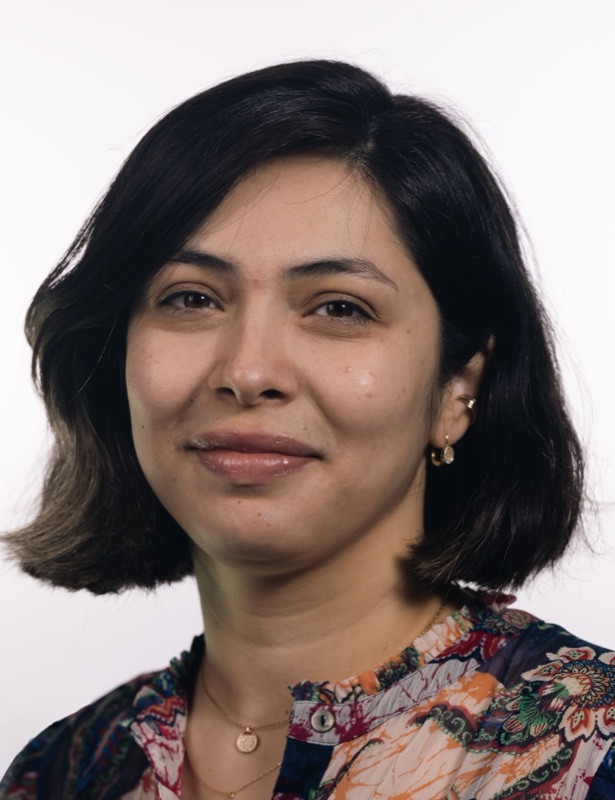
I am a Research Associate at the Alan Turing Institute in London, working at the intersection of AI and the natural world, from forecasting tomorrow’s weather to understanding the ecosystems beneath the ocean surface.
My current focus is machine learning for weather prediction. On the FastNet project, a collaboration between the Turing and the Met Office, I develop physically consistent, graph neural network-based models for global weather forecasting, and led the study of how the model encodes the input grid onto its mesh.
Previously, I worked on AI for marine biodiversity monitoring, building Edge AI models that classify plankton images in real time aboard research vessels with Cefas and the National Oceanography Centre. I hold a PhD in Computer Science from Teesside University, where I integrated imaging, genomic and metabolic data to improve survival prediction in ovarian cancer.
Research interests
I am interested in making machine learning reliable for the complex physical and biological systems we depend on, especially in the rare, high-impact cases that matter most.
- AI weather prediction: graph neural network forecasting models, and how design choices such as graph construction between the input grid and the model’s mesh shape forecast skill (FastNet).
- Physically consistent machine learning: training losses and evaluation beyond average error, such as power spectra, so that forecasts stay sharp and physically realistic.
- Rare and extreme events: long-tail learning for the cases that standard training under-serves, from rare plankton species to extreme weather.
- AI in the field: taking models from research to real-time deployment on edge hardware, as with the RAPID plankton monitoring system at sea.
- Multimodal learning: fusing imaging with omics, mechanistic models and metadata, for example to predict cancer survival (Cell Systems, 2026).
News
- Apr 2026: First-author paper on fusing imaging and metabolic modelling for ovarian cancer published in Cell Systems.
- 2026: FastNet paper on physically consistent loss design published in Artificial Intelligence for the Earth Systems.
- Sep 2025: FastNet v1.0 technical overview released, including my encoder graph-construction study (equal contribution).
- Jan 2025: RAPID, our real-time plankton identification dashboard, published in Frontiers in Marine Science.
- Oct 2024: Presented work on long-tail plankton classification at the ECCV Computer Vision for Ecology Workshop in Milan.
- May 2024: Tested our real-time plankton classifier at sea aboard the RV Cefas Endeavour (blog post).
- Mar 2024: Talk on plankton classification with Edge AI at the 7th Zooplankton Production Symposium in Hobart, Australia.
Selected publications
- Fusing imaging and metabolic modeling via multimodal deep learning in ovarian cancer
Eftekhari N., Verma S., Saha A., Zampieri G., Sawan S., Occhipinti A., Angione C. · Cell Systems · 2026 · paper - Technical overview and architecture of the FastNet Machine Learning weather prediction model, version 1.0
Daub E. G., et al. (incl. Eftekhari N.) · arXiv · 2025 · paper - RAPID: Real-time automated plankton identification dashboard using Edge AI at sea
Pitois S. G., Blackwell R. E., Close H., Eftekhari N., et al. · Frontiers in Marine Science · 2025 · paper - Improving in situ real-time classification of long-tail marine plankton images for ecosystem studies
Eftekhari N., Pitois S., Masoudi M., et al. · ECCV Workshop on Computer Vision for Ecology · 2024 · paper - Cross-attention enables deep learning on limited omics-imaging-clinical data of 130 lung cancer patients
Verma S., Magazzù G., Eftekhari N., et al. · Cell Reports Methods · 2024 · paper
Outside research
I enjoy hiking and gardening, which keep me close to the natural world that motivates my work.
I welcome collaborations in AI for weather, climate, ecology and health. Feel free to get in touch.